David Fleming
I deal with both Chris and Valdas who are helpful, competitive and both have really helped me sort jobs out with speedy deliveries
– via Google


Thinking about replacing your gas boiler? Heat pumps and the £7,500 Boiler Upgrade Scheme grant are among the most searched home heating topics this winter. Here are ten things every homeowner in Wimbledon, Merton and South West London should know, from how heat pumps work and who is eligible for the grant, to whether one will suit a London terrace or flat.
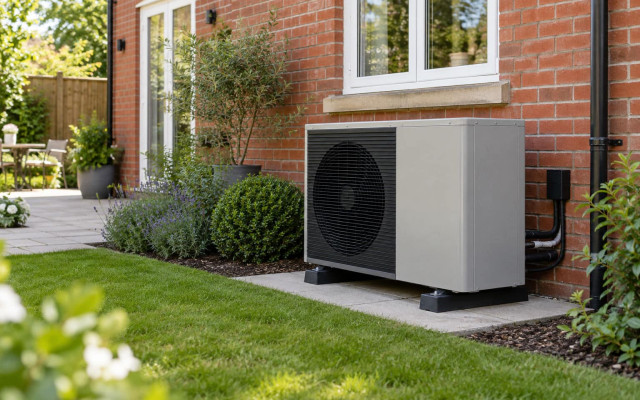
With the heating back on every evening and energy bills front of mind, more and more households are asking the same question: could a heat pump replace my gas boiler? Searches for heat pumps and the Boiler Upgrade Scheme grant climb every autumn, and the questions we hear at our Wimbledon trade counter are always similar. How do they work? How much grant can I get? Will one actually work in a London terrace or flat?
This guide answers those questions in plain English. Here are ten things worth knowing before you speak to an installer, whether you live in Wimbledon, Merton, Wandsworth or anywhere else across South West London.
A heat pump works a little like a fridge in reverse. Instead of burning fuel to create heat, it collects warmth that already exists in the outside air, the ground or water, and uses electricity to concentrate that warmth and move it into your home. Even on a cold winter day there is still useful heat in the air, and a modern heat pump is designed to extract it.
Because it moves heat rather than making it, a heat pump can deliver much more energy as heat than it uses in electricity. That is the key reason it is seen as the main low carbon replacement for gas boilers in the UK.
Air source heat pumps are by far the most common choice for homes. A unit sits outside, usually against a wall or in the garden, and supplies hot water to your radiators or underfloor heating and to a hot water cylinder.
Ground source heat pumps take heat from pipes buried in trenches or boreholes. They are very efficient but need more space and a bigger budget, so they are less common in London.
Air to air heat pumps work more like an air conditioning unit, blowing warm air into rooms. They do not produce hot water, so you would still need a separate way to heat your water.
Efficiency is measured as a ratio of heat produced to electricity used. You will often see the term SCOP, which stands for Seasonal Coefficient of Performance and reflects performance across a whole year. As a rough guide, a well designed and correctly installed system can produce around three units of heat for every one unit of electricity it uses, and sometimes more.
The important words there are well designed. A heat pump that is the wrong size, or is paired with radiators that are too small, will work harder and cost more to run. A proper heat loss survey of your home is essential.
The Boiler Upgrade Scheme is a government grant in England and Wales, run by Ofgem, that takes money off the cost of installing a low carbon heating system. The current grant amounts are:
Homes that currently heat with oil or LPG and are not connected to the gas grid can receive a higher temporary grant of £9,000 for an air source or ground source heat pump, for applications made up to 31 March 2027. Most London homes are on mains gas, so the standard £7,500 will be the figure that applies to most of our customers.
Only one grant is available per property, and it is deducted straight from your installer's bill, so you never have to claim the money back yourself.
You can usually apply if you own the property, including landlords and small business owners, and you are replacing a fossil fuel system such as a gas, oil or LPG boiler, or older direct electric heating. In general, new build homes, social housing and properties that have already received government funding for a heat pump are not eligible.
The good news is that the rules have become simpler. You no longer need to have completed insulation work recommended on your Energy Performance Certificate before you can apply. That said, a well insulated home will always get better results from a heat pump, so it is still worth tackling loft and cavity wall insulation where you can.
The process is led by your installer, which keeps it fairly simple:
Yes, in many cases, but every property is different. Terraced and semi detached houses with a small garden, side return or suitable wall space are often good candidates. Flats can be more complicated because you may need the freeholder's permission and somewhere suitable to put the outdoor unit.
Many heat pump installations in houses count as permitted development, which means you do not need full planning permission, but there are rules about size, siting and noise levels. If you live in a conservation area, a listed building or a flat, check with your local council before committing. A good installer will talk you through this and can advise on the quietest position for the outdoor unit.
Most London homes have a combi boiler, which heats water on demand. Heat pumps work differently, so you will normally need a hot water cylinder, which means finding space for one, often in an airing cupboard or loft.
Heat pumps also run at lower water temperatures than a gas boiler. To keep rooms just as warm, some radiators may need to be replaced with larger or more efficient models, and pipework may need upgrading. Your installer's heat loss survey will show which rooms need attention.
Running costs depend on how efficient your system is, how well insulated your home is and what electricity tariff you are on. Several energy suppliers now offer tariffs designed for heat pump owners, with cheaper rates at certain times of day, so it is worth comparing these once your system is installed.
Heat pumps work best when they run steadily at a lower temperature for longer periods, rather than being switched on and off in short bursts like a boiler. It can take a little time to get used to, but the result is a home that stays comfortably warm throughout the day.
Whether you are planning a heat pump next year or simply want to make your current boiler more efficient this winter, the same steps will help:
A heat pump is a long term investment, and for many homes the £7,500 Boiler Upgrade Scheme grant makes it far more affordable than it was a few years ago. The best results come from good design, sensible preparation and a trusted, qualified installer. If your boiler is getting old, now is a great time to start doing your research rather than waiting for it to break down in the middle of winter.
Our Wimbledon trade counter and Renewables range cover everything from heat pump compatible radiators, hot water cylinders and underfloor heating to pipe insulation, thermostatic radiator valves and smart controls. Pop in and speak to our friendly team, who will be happy to answer your questions or recommend a trusted local installer.
David Fleming
I deal with both Chris and Valdas who are helpful, competitive and both have really helped me sort jobs out with speedy deliveries
– via Google
Andrii Hlek
A great place, here you can find everything for plumbing and not only. The service is on top!
– via Google
Kraig Brown
Hi my name is Kraig precise supplies best prices on the market, every order delivered on time and there customer service 10/10 cheers team 👍
– via Google