Portia Booroff
Excellent and supportive company. Brilliant staff. Eager to help and knowledgeable. Will definitely use again and I highly recommend them. Excellent standard of craftsmanship.
– via Google


Frozen and burst pipes are one of the most common winter emergencies in UK homes. Here are ten simple ways every homeowner in Wimbledon, Merton and South West London can protect their plumbing before the big freeze, plus exactly what to do if a pipe bursts.
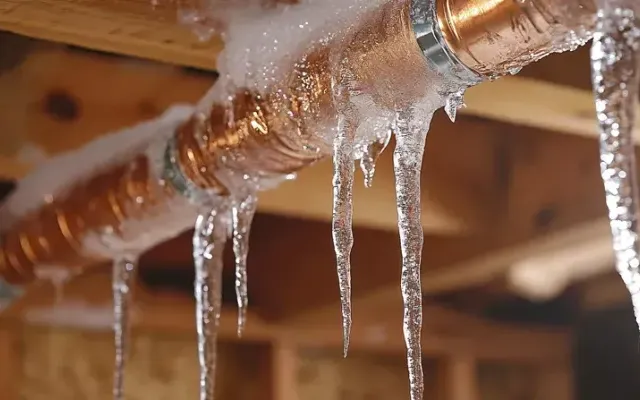
The first frosty mornings of the season have arrived, and every winter the same warning makes the headlines: frozen pipes and burst pipes. Water companies and insurers issue fresh advice as soon as temperatures drop, because a single burst pipe can soak ceilings, ruin flooring and leave a household without water just when they need it most. The good news is that most freezes can be prevented with a few simple, inexpensive steps.
Whether you live in a Victorian terrace in Wimbledon, a flat in Wandsworth or a family home in Merton, here are ten practical ways to protect your plumbing before the coldest weather sets in, plus what to do if the worst happens.
When water freezes it expands by around nine per cent. Inside a pipe, that expanding ice has nowhere to go, so pressure builds up between the ice and the closed tap or valve further along. Copper and plastic pipes can split or joints can be forced apart. Very often the damage is not noticed until the thaw, when water suddenly starts pouring out of the split. That is why prevention matters so much: by the time you see the leak, the pipe has already failed.
Your internal stopcock (sometimes called a stop tap or stop valve) turns off the water supply to your whole home. In many London properties it sits under the kitchen sink, but it can also be found in a downstairs toilet, airing cupboard, cellar or under the stairs. Find it today, check that it turns easily and make sure everyone in the house knows where it is. If it is stiff or seized, have it replaced before winter, as it is the single most important tool you have if a pipe bursts.
Pipes in lofts, garages, cellars, under suspended timber floors and along outside walls are the most likely to freeze. Foam pipe insulation is cheap, easy to fit and simply slides over the pipe. Choose the right internal diameter for your pipework (15mm and 22mm are the most common sizes in UK homes), cover bends and joints carefully and secure the ends with tape so there are no gaps for cold air to get in.
Many older London homes still have a cold water storage tank and a feed and expansion tank in the loft. If you have topped up your loft insulation, remember that the space above it becomes colder, which puts these tanks at greater risk. Fit an insulated jacket or lid to each tank, but do not insulate directly underneath them, as a little warmth rising from the rooms below helps to keep them above freezing. A properly fitted jacket on your hot water cylinder will also save energy all year round.
Outside taps are often the first thing to freeze. If yours has an isolating valve inside the house, turn it off, then open the outside tap to drain the water left in the pipe. If there is no isolating valve, fit an insulated outside tap cover. It is a small, low cost item that can prevent a split pipe and a soaked kitchen wall. Disconnect garden hoses too, as water trapped in a hose can freeze back into the tap.
With energy bills high, it is tempting to switch the heating off completely, especially overnight or when you are away. During a cold snap, however, keeping your home at a low, steady temperature is far cheaper than repairing a burst pipe. Many boilers and smart thermostats have a frost protection setting that will fire the heating only when the temperature drops close to freezing. If you are going away for the Christmas holidays, leave the heating on a low setting and ask a neighbour or friend to check the property.
Pipes hidden inside kitchen units and under sinks on outside walls can be surprisingly cold. On the coldest nights, open the cupboard doors to let warm air from the room circulate around them. Keeping the loft hatch slightly open for a few hours can also help warm air reach pipes and tanks in the roof space, although it should be closed again once the cold spell passes so you are not losing heat unnecessarily.
A dripping tap or leaking overflow pipe may seem minor, but slow moving water in a cold pipe or outside overflow can freeze and block it completely. Replace worn tap washers and cartridges, and repair faulty float valves in cisterns and tanks. At the same time, seal gaps around pipes where they pass through outside walls and floors, as cold draughts blowing directly onto pipework are a common cause of freezing.
If you turn on a tap and nothing comes out, or only a trickle, a pipe may be frozen. Turn off the water at the stopcock and open the affected tap so water can escape as the ice melts. Then warm the pipe gently, starting at the end nearest the tap and working back, using a hot water bottle, a towel soaked in warm water or a hairdryer on a low setting. Never use a blowtorch or any naked flame, and never pour boiling water directly onto pipes, as sudden heat can crack them. If you cannot find the frozen section, or the pipe is somewhere you cannot reach safely, call a qualified plumber.
Acting quickly can save thousands of pounds in damage. If a pipe bursts:
Most frozen and burst pipes can be avoided with an hour or two of preparation and a few low cost products. Spending a weekend afternoon lagging pipes, checking your stopcock and protecting your outside tap now could save you from a stressful and expensive emergency when temperatures plunge later this winter.
Our Wimbledon trade counter stocks everything you need to winter proof your plumbing, including foam pipe lagging, outside tap covers, tank and cylinder jackets, stopcocks, isolating valves, tap washers and frost protection heating controls. Pop in and speak to our friendly team, who will be happy to help you choose the right products or recommend a trusted local plumber.
Portia Booroff
Excellent and supportive company. Brilliant staff. Eager to help and knowledgeable. Will definitely use again and I highly recommend them. Excellent standard of craftsmanship.
– via Google
Andrii Hlek
A great place, here you can find everything for plumbing and not only. The service is on top!
– via Google
David Fleming
I deal with both Chris and Valdas who are helpful, competitive and both have really helped me sort jobs out with speedy deliveries
– via Google