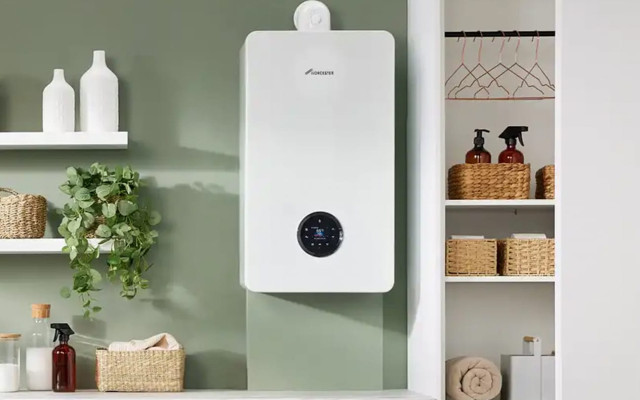
There is never a good time for the boiler to stop working, but it nearly always seems to happen on the first properly cold morning of the year. After months of sitting idle over the summer, boilers are suddenly asked to work hard again, and small faults that went unnoticed start to show. British Gas recently warned that around 34,000 homes across the UK could suffer a boiler breakdown as the weather turns colder, and searches for help with boiler problems always surge at this time of year.
The good news is that many of the most common faults have simple causes. Some can be put right in a few minutes without any tools. Others need a professional, and knowing the difference can save you both money and worry. Here are eight problems we hear about most often from customers in Wimbledon, Merton, Wandsworth and across South West London.
Safety first: never remove the casing of your boiler or attempt any repair to gas parts yourself. Only a Gas Safe registered engineer is legally allowed to work on gas appliances. If you can smell gas, turn off the gas supply at the meter if it is safe to do so, open the windows, do not use any electrical switches and call the National Gas Emergency number on 0800 111 999 straight away.
1. Low boiler pressure
This is the single most common reason a combi boiler stops working. Look at the pressure gauge on the front of the boiler. When the heating is off and the system is cold, it should usually read between 1 and 1.5 bar. If it has dropped below 1 bar, many boilers will lock out to protect themselves and show a fault code.
You can normally top up the pressure yourself using the filling loop, which is usually a silver braided hose or a small key underneath the boiler. Open the valves slowly, watch the gauge rise to around 1.2 bar, then close them again firmly. Your boiler manual will show you exactly how to do this for your model. If the pressure keeps dropping every few days, you probably have a small leak somewhere in the system, or the pressure relief valve may be faulty, and that needs an engineer to find and fix.
2. A frozen condensate pipe
If your boiler stops during a cold snap and you hear a gurgling sound, a frozen condensate pipe is the most likely cause. Modern condensing boilers produce waste water which runs outside through a plastic pipe, usually around 22mm wide. When temperatures fall below freezing, the water inside can turn to ice and block the pipe, so the boiler shuts down.
To thaw it, find where the pipe leaves your home and pour warm water slowly along its length, or hold a hot water bottle or warm cloth against it. Never use boiling water, as it can crack the plastic. Once the ice has cleared, reset your boiler. To stop it happening again, fit pipe lagging to any section that runs outside. If the pipe is long, narrow or has a shallow fall, an installer may suggest upsizing it to a wider pipe.
3. Radiators that are cold at the top
If a radiator is warm at the bottom but cold at the top, air has become trapped inside. Bleeding the radiator is a quick job. With the heating turned off and the radiators cool, use a radiator key to open the bleed valve at the top corner a quarter turn. Hold a cloth underneath to catch any drips. You will hear a hiss as the air escapes, and you can close the valve again as soon as water appears.
Bleeding radiators lowers the pressure in the system, so always check the boiler gauge afterwards and top it up if needed.
4. Radiators that are cold at the bottom
A radiator that is hot at the top but cold at the bottom usually means sludge has built up inside. Sludge is a mixture of rust and debris that settles over time, blocking the flow of hot water and making your boiler work harder than it needs to. It is one of the main reasons older systems become noisy, slow to heat up and expensive to run.
A professional powerflush or chemical flush will clear the system. Adding a good quality inhibitor afterwards, and fitting a magnetic system filter on the return pipe to the boiler, will help keep it clean for years. Many boiler manufacturers now require a filter to keep the warranty valid.
5. Banging, gurgling or kettling noises
Gurgling sounds are often caused by trapped air, so bleeding the radiators may fix them. A loud rumbling or whistling sound, rather like a kettle coming to the boil, is known as kettling. It happens when limescale or sludge builds up on the heat exchanger, causing water to overheat and boil in small pockets.
Kettling is very common in London because of our hard water. It reduces efficiency and can shorten the life of your boiler, so it is worth booking an engineer to inspect and descale the system. A scale reducer fitted to the incoming water supply can help protect your boiler and your hot water pipes in future.
6. No heating or hot water at all
Before assuming the worst, run through a few simple checks. Is the power switched on at the fused spur next to the boiler? Has the timer or programmer slipped back to the wrong time after the clocks changed? Is the thermostat set above the current room temperature, and do its batteries need replacing? Have you got gas to other appliances such as the hob, and is there credit on your meter if you have a prepayment meter?
If everything looks fine, check the display for a fault code and look it up in your boiler manual. Many boilers have a reset button that will clear a temporary lockout. If the boiler locks out again straight away, or you need to keep pressing reset, stop and call an engineer.
7. The pilot light or ignition keeps failing
Older boilers have a pilot light that can be blown out by draughts or a faulty thermocouple. Newer boilers use electronic ignition and will show an ignition fault code if they cannot light. The cause might be something simple such as a frozen condensate pipe or an interrupted gas supply, but it can also point to a problem with the gas valve, fan or ignition electrode.
Follow the relighting instructions in your manual if your boiler has a pilot light. If it will not stay lit, or an ignition fault keeps coming back, this is a job for a Gas Safe registered engineer.
8. Water leaking from the boiler
A drip from underneath the boiler should never be ignored. It can damage your floors and ceilings and lead to corrosion of the electrical parts inside. Common causes include a worn seal, a loose pipe joint or a faulty pressure relief valve, which can discharge water through a small copper pipe outside if the system pressure gets too high.
Turn off the boiler, place a container underneath to catch the water and call an engineer. In the meantime, make sure you know where your main stopcock is so you can shut off the water quickly if a leak gets worse.
Repair or replace?
If your boiler is more than 10 to 15 years old, breaks down regularly or uses parts that are becoming hard to find, replacement may make more sense than repeated repairs. Bear in mind that prices for new gas boilers have been creeping up. Reports suggest that manufacturers have built a hidden charge of around £100 into the price of many gas boilers because of the government's Clean Heat Market Mechanism, and proposed changes could push this towards £140. Planning a replacement before your old boiler fails completely gives you time to compare options, including low carbon systems such as air source heat pumps, which may qualify for a grant through the Boiler Upgrade Scheme.
Whatever you decide, an annual service by a Gas Safe registered engineer is the best way to catch problems early, keep your boiler running safely and protect your warranty. It is also a good idea to fit an audible carbon monoxide alarm near any gas appliance.
Find the parts you need at Precise Supplies
A little preparation now can save you from a cold house and an emergency call out later. Check your boiler pressure, bleed your radiators, lag any exposed pipes and make sure you know where your stopcock is before the first frost arrives.
Our Wimbledon trade counter stocks everything you need to keep your heating system in good shape, from radiator keys, pipe lagging and inhibitor to magnetic system filters, thermostatic radiator valves, smart controls, radiators and replacement boilers. Pop in and speak to our friendly team, who will be happy to point you in the right direction or recommend a trusted local installer.